 Venus Laser
What is Triple Diode Laser and How Does It Benefit You?
The Triple Diode Laser is revolutionizing various industries, particularly in medical and cosmetic applications. According to Dr. Emily Carter, a leading expert in laser technology, "The Triple Diode Laser offers unparalleled precision and efficiency." This innovative technology uses three distinct wavelengths to target different skin concerns effectively.
The Triple Diode Laser is known for its versatility. It can address various issues like hair removal, skin rejuvenation, and hair restoration. Patients often seek treatments seeking quick results and minimal downtime. The multi-wavelength system allows for tailored treatments suited to individual needs. This approach enhances efficacy and safety, significantly reducing potential side effects.
However, while the benefits are clear, the technology is not without challenges. Not all patients respond the same way to treatments. Some may experience unexpected reactions. This variability underscores the importance of professional consultation and personalized care in the application of the Triple Diode Laser. As the industry evolves, ongoing research into its effectiveness and safety remains critical.
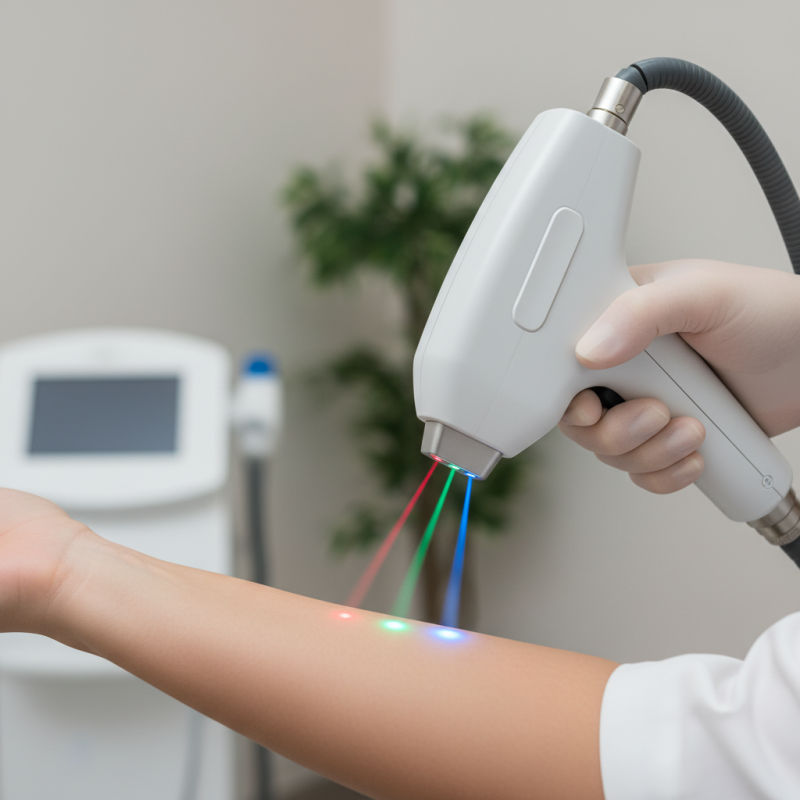
What is a Triple Diode Laser?
Triple diode lasers represent a significant advancement in laser technology. These devices utilize three separate diode lasers to produce a cohesive light beam. This configuration enhances performance by allowing for better energy efficiency and improved wavelength mixing. Diode lasers, known for their compact size, are gaining traction in various applications such as medical, industrial, and research fields.
Research indicates that the use of triple diode lasers can increase efficiency by up to 25% compared to traditional systems. The adjustable wavelengths provide versatility, catering to a range of materials and projects. For example, in medical settings, this translates to more effective treatments and faster recovery times. Additionally, the ability to target different tissues makes these lasers invaluable in surgeries needing precision.
Tip: When considering laser solutions, assess the specific application needs to maximize the benefits of this technology.
Triple diode lasers offer less energy consumption, which is vital for sustainability. Lower energy usage means reduced operational costs as well. However, users must be mindful of maintenance and alignment. Even a slight misalignment can lead to significant performance issues. Balancing quality with everyday usability can be a challenge, and constant monitoring is essential.
Tip: Regular maintenance checks can save time and costs in the long run.
What is Triple Diode Laser and How Does It Benefit You?
| Feature | Description |
|---|---|
| Laser Type | Triple Diode Laser |
| Wavelength | Multiple Outputs (e.g., 660 nm, 810 nm, 980 nm) |
| Applications | Hair Removal, Skin Tightening, Tattoo Removal |
| Benefits | Effective hair reduction, minimal discomfort, versatile treatment options |
| Treatment Duration | Typically ranges from 15 to 60 minutes depending on area |
| Skin Types | Effective for various skin types (Fitzpatrick I-V) |
| Recovery Time | Minimal recovery time, usually under 24 hours |
FAQS
: A triple diode laser uses three diodes to produce a cohesive light beam. This improves performance and efficiency.
Research shows triple diode lasers can increase efficiency by up to 25%. This makes them more effective for various applications.
They are used in medical, industrial, and research fields. In medical settings, they offer faster recovery and effective treatments.
Maintenance ensures alignment. Even minor misalignments can cause significant performance drops. Regular checks save time and costs.
They target specific tissues precisely, reducing heat exposure. This leads to quicker recovery times and fewer side effects.
Keep a journal of your experiences. Reflect on successes and challenges. This habit can improve future outcomes significantly.
No, over-reliance can cause neglect in proper training. Practicing techniques is essential for effective usage without complications.
Adjustable wavelengths provide versatility for different materials and projects. This feature is key in fields like dermatology and dentistry.
Initial adjustments can be tricky. Users may need practice to fully master the settings for optimal performance.
Assess the specific application needs thoroughly. Understanding these needs maximizes the technology's benefits and efficiency.
Conclusion
The Triple Diode Laser is an advanced laser technology that utilizes three diode sources to enhance performance and versatility. This innovative device operates by combining the output of multiple diodes, resulting in improved efficiency and precision for various applications. The technology behind Triple Diode Lasers involves complex optics and electronic systems that optimize laser beam quality and stability.
Triple Diode Lasers have found significant applications across diverse fields, including medical treatments, industrial manufacturing, and scientific research. The benefits for users are substantial, particularly in terms of increased energy output, better targeting capabilities, and reduced treatment time. As research and development continue, future enhancements in diode laser technology promise to deliver even greater advancements, making Triple Diode Lasers an essential tool for numerous industries.
