
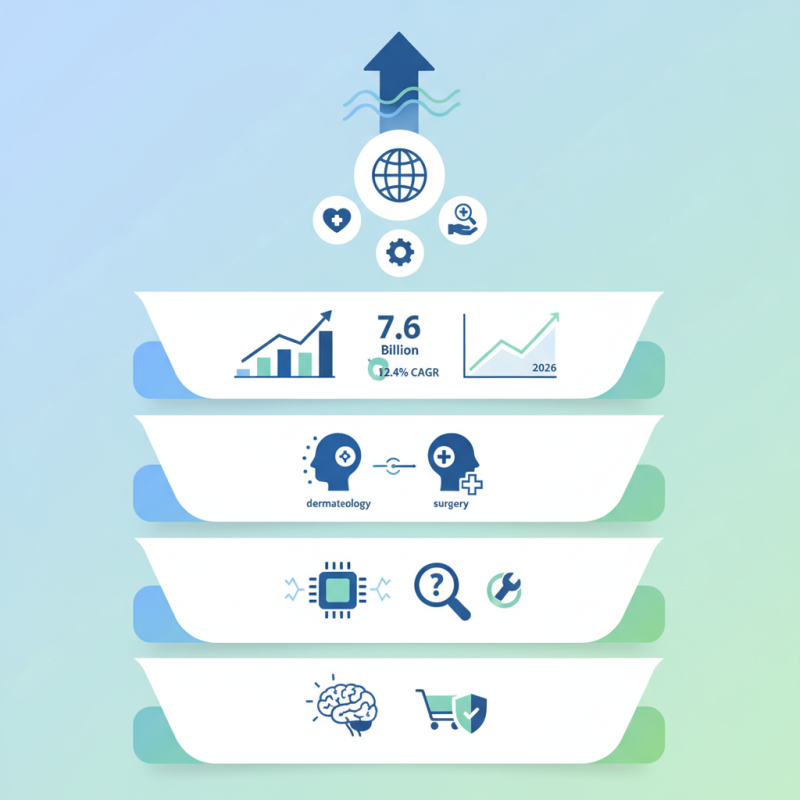
As the global demand for efficient medical and industrial applications rises, diode lasers are becoming increasingly significant. According to a recent market analysis, the global diode laser market is projected to reach $7.6 billion by 2026, exhibiting a CAGR of 12.4%. This growth is driven by advancements in technology and innovative applications across various sectors, including healthcare and manufacturing.
Diode lasers are renowned for their compact size, reliability, and energy efficiency. They have revolutionized procedures in dermatology and surgery, offering precise treatment options with minimal downtime. Industry experts highlight the growing trend of integrating diode lasers into cosmetic procedures. However, the market faces challenges, such as ensuring safety and addressing the need for regular maintenance.
Looking towards 2026, buyers and businesses must stay informed about emerging trends. Awareness of new technologies and product innovations will be crucial for making educated purchasing decisions. As the industry evolves, a commitment to quality and performance will remain essential for navigating these changes successfully.
The landscape of diode laser technology is evolving rapidly. In 2026, advancements will focus on efficiency and versatility. New designs may enhance performance while reducing energy consumption. This change reflects a growing demand for eco-friendly solutions in various industries.
Innovations might also include compact models with improved cooling systems. Smaller devices could open new applications in fields like healthcare and telecommunications. The portability of these lasers may revolutionize how professionals approach tasks. However, some challenges remain. Manufacturers must ensure reliability while balancing size and power.
Moreover, integrating smart technology into diode lasers could lead to better user experiences. Smart features can allow real-time monitoring and adjustments. This transformation may create a need for ongoing education within the workforce. Implementing new technology introduces a learning curve. Therefore, users may need to adapt to these changes carefully. Embracing innovation, while addressing potential struggles, will be crucial in the upcoming years.
In 2026, diode lasers are set to revolutionize multiple industries. These compact sources of light are efficient and versatile, making them indispensable for various applications. In manufacturing, diode lasers are crucial for precise cutting and welding. They deliver high-quality beams that enhance productivity. Their increasing adoption in material processing reflects a broader trend towards automation and efficiency.
The medical field also stands to benefit significantly. Diode lasers are effective in surgeries and skin treatments. Their ability to target specific tissues minimizes damage to surrounding areas. This precision improves patient outcomes. Moreover, in telecommunications, diode lasers facilitate faster data transmission. As the demand for high-speed internet grows, their role becomes vital.
However, challenges remain. The rapid pace of innovation means that staying updated is crucial. Adapting to new technologies can be daunting for some companies. There is a need for ongoing training and development. Continuous assessment of these advancements will shape successful implementations. Understanding the limitations and potential pitfalls of diode lasers is essential for maximizing their benefits.
| Application Area | Expected Market Growth (%) | Key Trends | Major Uses |
|---|---|---|---|
| Medical | 15% | Laser therapy advancements | Surgical procedures, dermatology |
| Manufacturing | 10% | Automation and precision cutting | Metal cutting, engraving |
| Telecommunications | 12% | Wavelength division multiplexing | Data transmission, fiber optics |
| Consumer Electronics | 8% | Integration with smart devices | Laser pointers, projectors |
| Defense and Security | 20% | High-power lasers for military applications | Targeting, rangefinding |
The diode laser market is evolving rapidly. Designers are focusing on improving efficiency and compactness. These changes can lead to better performance in various applications, from medical to industrial uses. Increased power output in smaller packages is a key goal. This not only saves space but also reduces energy costs.
Developing new materials is crucial to achieving these improvements. Researchers are exploring innovative semiconductor compounds. These materials can enhance thermal management and light emission. More efficient cooling systems are also emerging. These systems can maintain optimal performance, even under heavy use.
However, some challenges remain. The balance between efficiency and cost is delicate. Not every design breakthrough translates to affordability. Users must evaluate long-term benefits versus initial investments. As the market grows, keeping up with these trends will be essential for buyers. Understanding the science behind these changes ensures informed decisions.
The diode laser industry faces significant challenges as it evolves. One pressing issue is the increasing demand for higher power efficiency. According to a recent report, over 70% of manufacturers express concerns about meeting stringent energy consumption standards. This requires investment in research and development to create innovative thermal management solutions.
Manufacturers also grapple with supply chain disruptions. A survey indicated that 65% of diode laser producers experienced delays in component delivery. These interruptions can impact production schedules and customer satisfaction. Implementing diversified sourcing strategies could help mitigate these risks. Building strong relationships with suppliers is crucial.
Moreover, regulatory compliance poses a challenge. As new safety standards emerge, manufacturers must adapt. Staying informed about regulatory changes is vital for industry players. Companies should invest in training programs to ensure their workforce is knowledgeable about these requirements. Embracing such strategies can enhance resilience in a rapidly changing market and lead to long-term success.
In 2026, global buyers are focusing on specific demands for diode lasers. They seek better energy efficiency and longer lifespan. These buyers prioritize products that meet performance and sustainability standards. Additionally, they want advanced technical features to improve usability in various applications. Manufacturers must listen closely to consumer needs.
When choosing diode lasers, consider these tips: Check energy consumption ratings to ensure efficiency. Investigate the cooling mechanisms used; they play a vital role in longevity. Users desire lasers that are easy to operate and maintain. Consider the end-use applications carefully; each field may have unique requirements.
Incomplete features can lead to frustration. For instance, some lasers may overheat during prolonged use. It's crucial to evaluate thermal management carefully. The trend leans towards adaptable models that suit various tasks. Buyers should reflect on their specific use cases when selecting equipment. This attention to details can make a significant difference in user satisfaction.
: Advancements will focus on efficiency, versatility, and eco-friendly solutions across various industries.
New designs may enhance performance while reducing energy consumption, benefiting users and the environment.
Innovations may lead to smaller devices with improved cooling systems for healthcare and telecommunications applications.
Manufacturers must balance size and power while ensuring reliability and maintaining performance standards.
Smart features can enable real-time monitoring and adjustments, improving user experience and efficiency.
Users may need to adapt to new technologies, which could introduce a learning curve and require continuous training.
They improve surgical precision and skin treatments by targeting specific tissues, minimizing damage to surrounding areas.
They facilitate faster data transmission, playing a crucial role as demand for high-speed internet increases.
Companies must stay updated and assess innovations regularly to maximize the benefits and address potential challenges.
Understanding limitations and risks around new technologies is essential for successful application and implementation.
As we approach 2026, diode laser technology continues to evolve, driven by significant innovations and advancements. This year's overview highlights key applications across various industries, showcasing how diode lasers are increasingly utilized in sectors such as healthcare, manufacturing, and communications. The push for efficiency and design improvements remains at the forefront, with emerging trends focusing on enhanced performance and cost-effectiveness.
However, diode laser manufacturers face challenges such as supply chain disruptions and the need for continuous R&D. Addressing these issues is vital for meeting the growing expectations of global buyers. In 2026, consumers prioritize high-quality, reliable diode lasers that deliver superior performance while remaining economically viable, setting the stage for future developments in this dynamic field.

Venus Laser