 Venus Laser
China Best Hot Sales Diode Laser for Global Buyers?
In the rapidly evolving world of technology, the demand for Hot Sales Diode Lasers has surged. Industry expert Dr. Emily Chen, a renowned physicist, emphasizes their significance: "Hot Sales Diode Lasers are revolutionizing sectors from medical to industrial applications." This statement reflects the lasers' versatility and critical role in enhancing efficiency across various fields.
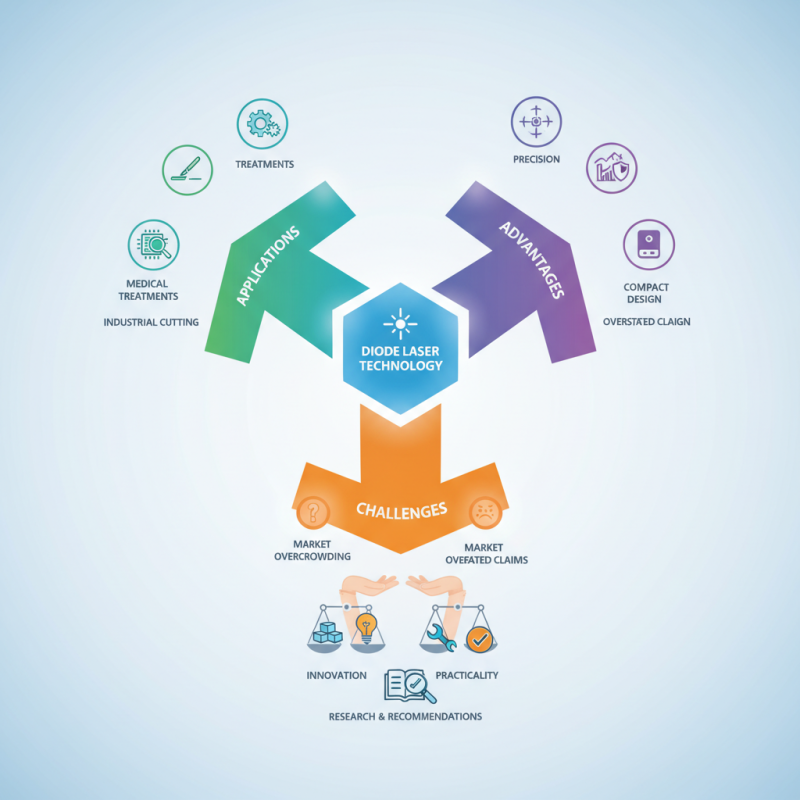
Hot Sales Diode Lasers offer incredible precision and reliability. They excel in precision cutting and medical laser treatments, among other applications. Their compact design makes them flexible for integration, catering to both small startups and large enterprises. However, despite their advantages, buyers must navigate a crowded market full of options.
Choosing the right diode laser can be daunting. Some manufacturers overstate their products' capabilities, leading to buyer remorse. Buyers should do thorough research and seek recommendations from trusted sources. Balancing innovation with practical applications remains a challenge in this competitive landscape.
China's Dominance in the Diode Laser Market: An Overview
China has emerged as a powerhouse in the diode laser market, accounting for approximately 60% of global production in recent years. This dominance is largely driven by advances in manufacturing technology and favorable investment conditions. A report by ResearchAndMarkets.com states that the global diode laser market is expected to reach $5.2 billion by 2025, with a significant portion attributed to China's robust output.
The quality of Chinese diode lasers has improved dramatically. Many manufacturers now adhere to rigorous international standards, ensuring reliability and performance. However, challenges remain. Some producers still lack consistency in quality control, leading to variability in product performance. This inconsistency can impact end-users, making it essential for global buyers to conduct thorough due diligence before purchasing.
Furthermore, the competitive landscape is evolving. As more players enter the market, price pressure has intensified. Some companies resort to aggressive pricing strategies, which can compromise quality. Industry experts suggest that buyers should evaluate suppliers based on more than just cost. Long-term relationships and comprehensive support services are becoming increasingly important. As the market matures, discerning buyers will focus on reliability and technological advancements.
China's Dominance in the Diode Laser Market: An Overview
| Category | Quantity Sold (Units) | Market Share (%) | Average Price (USD) | Growth Rate (%) |
|---|---|---|---|---|
| Medical Lasers | 1,200,000 | 35.0 | 500 | 8.5 |
| Industrial Lasers | 850,000 | 30.0 | 700 | 6.4 |
| Cosmetic Lasers | 500,000 | 20.0 | 300 | 10.0 |
| Communications Lasers | 400,000 | 15.0 | 1000 | 7.2 |
| Research & Development | 200,000 | 5.0 | 1500 | 5.0 |
FAQS
: Diode lasers are compact, energy-efficient, and versatile. They convert electrical energy to optical energy with minimal losses.
Their wavelength range, from 400nm to 1700nm, allows use in material processing, medical treatments, and communication technologies.
Output power can vary, so regular calibration ensures consistent performance and prevents potential failures.
Diode lasers typically have a longer operational lifespan, but improper handling can cause premature failure.
High-power diode lasers are in high demand across sectors like manufacturing and healthcare, expected to reach $3.8 billion by 2026.
Some manufacturers struggle with maintaining consistent product quality, leading to increased costs and delays.
Limited resources hinder smaller companies from investing in high-power diode lasers, despite their advantages.
Chinese manufacturers are competitive, focusing on innovation but face quality control challenges and rapid market changes.
Manufacturers adapt products based on feedback from global clients, enhancing trust but requiring time to build relationships.
Buyers need to be cautious and choose reputable manufacturers to avoid risks associated with quality inconsistencies.
Conclusion
The article "China Best Hot Sales Diode Laser for Global Buyers?" explores China's leading position in the diode laser market, highlighting the technology's critical specifications and advantages across various industrial applications. With increasing demand for high-power diode lasers in 2023, Chinese manufacturers have become pivotal players, driving innovation and competitive pricing.
As global markets adjust, the article provides an analysis of market trends, showcasing a rising interest in high-performance diode lasers. It also details export statistics and market share, illustrating how Chinese products meet the growing needs of international buyers seeking dependable and efficient diode laser solutions. Overall, the article emphasizes the significance of "Hot Sales Diode Laser" in catering to diverse industrial demands.
