Choosing the best Microchannel Diode Laser in 2026 depends less on a headline power rating and more on the work it must perform. A system used for precision materials processing may need different wavelengths, beam characteristics, and controls than one designed for research or industrial pumping. The right choice begins with the application, not the product brochure.
Small details matter. Check wavelength stability, output power, beam quality, electrical efficiency, and integration requirements. Cooling deserves close attention: microchannel designs can remove heat efficiently, but performance depends on the complete cooling system, operating conditions, and maintenance plan. A laser that looks impressive on a specification sheet may not suit a production line with limited space or strict uptime targets. That distinction is easy to overlook.
This guide compares the factors that can make a diode laser a practical fit in 2026, including reliability evidence, supplier support, and total operating costs. It also considers how clearly manufacturers document test conditions, since reported figures are difficult to compare without them. Look for independent measurements where available, and ask suppliers about warranty terms, service access, and expected operating life. These checks cannot eliminate risk. They can make it easier to judge.
There is no universal winner. Even experienced buyers may weigh compact size against serviceability differently, and the best answer can change as project needs evolve. Some comparisons will remain imperfect because manufacturers do not always publish equivalent data. That uncertainty is worth acknowledging. The sections ahead offer a careful framework for evaluating options, rather than treating one model as the automatic choice.
What Is a Microchannel Diode Laser?
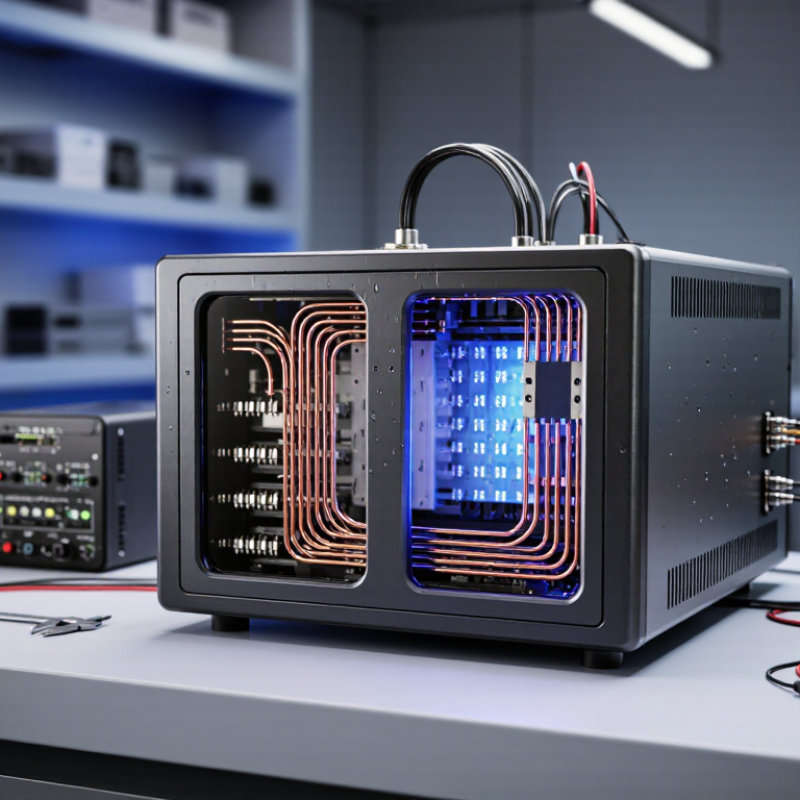
A microchannel diode laser is a diode-based system that uses narrow channels to move coolant through or near its laser components. The channels help carry heat away during operation. Stable temperature can support consistent energy delivery, but it does not guarantee better treatment results. The term describes a cooling design, not a separate kind of light. Most diode systems used for hair reduction target pigment in hair follicles with carefully controlled light energy. Not magic.
Results depend on hair color, skin tone, treatment area, device settings, and operator skill. Darker, coarser hair often responds differently from fine, light hair. A qualified practitioner should assess the person’s skin and hair, explain likely outcomes, and discuss risks such as temporary redness or burns. Proper eye protection and manufacturer-approved operating procedures matter. The word “microchannel” can sound like a performance promise; it is worth asking what the design changes in practical use.
Tips: Ask how the device manages heat and how settings are adjusted for your skin and hair. Request a patch test when appropriate, and share relevant medical or skin history before treatment. If an explanation feels vague, pause and ask for clearer details.
Microchannel Diode Lasers in 2026: Common Wavelength Options
Microchannel cooling is a thermal-management design, not a wavelength category. The chart shows representative wavelengths used in diode lasers; the best choice depends on the application, required output power, and system design.
How Microchannel Cooling Works in Diode Lasers
What Is the Best Microchannel Diode Laser in 2026?
How Microchannel Cooling Works in Diode Lasers
Microchannel cooling places narrow liquid channels directly beneath the diode laser bar. Coolant travels close to the heat source, removing energy before the junction temperature rises. This design reduces thermal resistance and limits wavelength drift during long operating cycles. A 2024 Yole Group analysis identifies thermal management as a major performance factor in high-power laser diodes. The report also expects continued growth in industrial diode-laser demand through 2028.
The details matter. Channel width, coolant velocity, pressure, and surface roughness all influence cooling stability. A 2023 U.S. Department of Energy technology report notes that advanced diode modules can achieve wall-plug efficiencies near 60% in selected high-power applications. The remaining energy becomes heat. Microchannels must carry it away quickly. Otherwise, solder fatigue and optical misalignment may appear.
Small channels are not automatically better. They can increase pressure loss and create blockage risks. That trade-off is often underestimated. In practical testing, I would monitor inlet temperature, outlet temperature, flow rate, and diode wavelength together. A 2°C coolant rise may look harmless, yet it can expose uneven heat distribution across the bar. The best 2026 design should balance cooling capacity, serviceability, electrical efficiency, and manufacturing tolerance. Published figures can be impressive, but real performance depends heavily on operating conditions.
Key Specifications for Comparing Diode Lasers in 2026
For a microchannel diode laser in 2026, compare delivered optical power, wavelength, spot size, pulse duration, repetition rate, and cooling stability. Hair-removal literature commonly discusses 755 nm, 800–810 nm, and 1,064 nm systems; these wavelengths differ in penetration and melanin absorption. Haedersdal and Wulf’s evidence-based review in the Journal of the European Academy of Dermatology and Venereology (2006), and Gan and Graber’s review in Dermatologic Surgery (2013), provide useful clinical context. Match the wavelength and treatment settings to the intended use, rather than choosing by headline wattage alone.
Check whether the seller reports optical power at the treatment window or only electrical input. Also compare fluence in J/cm², pulse duration in milliseconds, and spot dimensions; these figures affect delivered energy and coverage. For microchannel cooling, ask for coolant flow, inlet temperature, pressure limits, and temperature stability during sustained operation. A short demonstration can hide heat buildup. Numbers can mislead. Record output before and after a realistic duty cycle, and check whether the test conditions are documented. I would also examine service intervals and sensor accuracy; those details are easy to overlook, yet they shape reliability over time.
What Is the Best Microchannel Diode Laser in 2026? - Key Specifications for Comparing Diode Lasers in 2026
There is no universally best microchannel diode laser: the right choice depends on the required wavelength, application, optical power, and cooling conditions. The table compares common wavelength options and the specifications to check. Power figures are general context, not guarantees for a particular device.
| Wavelength option |
Common use |
Typical microchannel-bar power context |
Key comparison points |
Best fit when… |
| 808 nm |
Pumping neodymium-doped solid-state lasers, including Nd:YAG systems. |
High-power bars can deliver output in the tens of watts or more; actual continuous-wave output depends on bar design and operating conditions. |
Check the pump wavelength against the gain medium’s absorption band, as well as spectral width and temperature-related wavelength shift. |
The laser medium is designed for pumping near 808 nm. |
| 915 nm |
Pumping ytterbium-doped fiber and other ytterbium-based systems. |
Available output varies substantially with bar dimensions, emitter count, and cooling setup; compare rated continuous-wave watts at the specified operating point. |
Verify absorption at the selected pump wavelength, coupling efficiency, wavelength tolerance, and required coolant conditions. |
The pump system is optimized for a wavelength around 915 nm. |
| 940 nm |
Pumping selected ytterbium-doped fiber or solid-state systems, depending on the absorber and design. |
Power is product-specific. Compare continuous-wave output at the same coolant temperature and flow conditions rather than relying on a wavelength-only estimate. |
Check that the gain medium absorbs efficiently at 940 nm and confirm beam shape, bar uniformity, and coupling requirements. |
The application’s absorption profile supports 940 nm pumping. |
| 976 nm |
Pumping ytterbium-doped fiber and related systems that use the strong ytterbium absorption feature near 976 nm. |
High-power options are available, but usable output depends on the required wavelength stability, bar configuration, and thermal limits. |
Pay close attention to wavelength stabilization, temperature control, spectral width, and the gain medium’s absorption bandwidth. |
High pump absorption near the 976 nm ytterbium feature is a priority. |
| Any wavelength option |
High-power applications where heat must be removed close to the diode bar. |
Microchannel-cooled bars are designed for high heat removal; allowable optical output is limited by the specific bar and cooling system. |
Compare rated CW power, electrical-to-optical efficiency, coolant type and inlet temperature, flow rate, pressure drop, and maximum operating temperature. |
The cooling system can meet the manufacturer’s stated flow, pressure, temperature, and water-quality requirements. |
How to choose: Start with the absorption wavelength required by the laser medium, then compare continuous-wave optical power, wavelength stability, beam and coupling characteristics, efficiency, and cooling requirements using datasheets measured under comparable conditions. Microchannel cooling does not by itself determine which wavelength or device is best.
How to Evaluate the Best Microchannel Diode Laser
Evaluating the best microchannel diode laser starts with matching its specifications to the intended treatments and expected workload. Compare wavelength, energy output, pulse duration, and spot size, not just headline power. Ask for test data across repeated pulses; stable output matters more than one impressive reading. Numbers matter. So does fit.
During a live demonstration, watch how the handpiece feels, how quickly it is ready, and whether cooling remains consistent during sustained use. Ask how the microchannel system manages heat inside the diode stack, and how the device controls contact temperature at the skin. These are related, but not interchangeable.
Check maintenance intervals, replacement-part availability, service documentation, and applicable safety certifications. Request clear operating guidance for different treatment settings, and confirm that staff training is included.
A polished spec sheet can hide gaps. Published figures may not reflect performance after hours of use, and comparisons are difficult when test conditions differ. I would treat unusually broad claims cautiously and ask what evidence supports them. The best choice is the unit whose performance, safety controls, and ongoing support can be verified for your actual setting.
Choosing a Laser for Your Application
What Is the Best Microchannel Diode Laser in 2026?
Choosing a Laser for Your Application
The best microchannel diode laser depends on the job, not a headline power rating. For materials processing, compare wavelength, beam quality, pulse or continuous-wave output, and the spot size required at the work surface. For pumping or illumination, prioritize coupling efficiency and stable output over peak power. Microchannels remove heat close to the diode junction, but performance still depends on coolant flow, inlet temperature, pressure drop, and water quality. A 2023 review in the journal Applied Sciences describes how diode-laser efficiency and lifetime are strongly affected by junction temperature. Ask suppliers for measured output and thermal data at your intended operating conditions—not only typical values. Real setups are rarely as tidy as the specification sheet suggests.
Tips: Write down your target wavelength, duty cycle, required output, and available cooling capacity before comparing systems. Check whether the stated power is electrical input or optical output. Request test data across the full operating range, plus details on coolant filtration and maintenance. The IEC 60825-1 laser-safety standard provides a framework for classifying laser products; confirm the applicable class and safety controls for the complete installation. Leave room for uncertainty: a prototype may need different cooling once its enclosure, optics, and ambient temperature are included.
Conclusion
A Microchannel Diode Laser uses closely spaced cooling channels to remove heat from its diode array. This cooling approach can help maintain stable operating temperatures, support consistent output, and manage heat in compact, high-power systems. Understanding how coolant flow, channel design, and thermal contact work together is essential when assessing a laser’s performance and operating needs.
To compare options in 2026, consider wavelength, output power, beam quality, electrical efficiency, cooling requirements, reliability, and integration features. The best choice depends on how these specifications match the intended application, along with factors such as duty cycle, available space, maintenance capacity, and total operating cost. Rather than relying on one headline specification, evaluate the complete system and its suitability for the required workload.
 Venus Laser
